Why is freeze-drying not just drying? Drying is the oldest method of food preservation used by man. Meat and plants were dried in the sun, in the wind, and even in the cold. After all, most edible foods contain a significant amount of moisture, which is a favorable environment for the development of microorganisms that cause spoilage. Accordingly, it has been observed that reducing the amount of moisture or drying increases the stability of food products during long-term storage.

Today, drying is widely used in all branches of the food industry. During the drying process, water evaporates from the product. To do this, we need to heat the product in a certain way. There are a huge number of types of equipment for drying food, which differ in the way heat is supplied to the latter. In modern equipment, energy transfer can occur by contact of heated surfaces to trays with the product (conduction), convection of hot air in the chamber, infrared radiation or high-frequency current.
Important aspects are the temperature and pressure in the drying chamber. At high temperatures (more than +60 degrees C) and at atmospheric pressure, part of the nutrients in the product are destroyed, oxidation of fats worsens the taste properties, and also, due to the destruction of the product cells, the appearance deteriorates. After hydration (the process of restoring a dry product by saturating it with water), such a product bears little resemblance to its state before drying, although it has satisfactory taste properties. However, the simplicity of this drying process and the sufficient quality of the products, together with the low cost of the equipment and the availability of simple household dryers, make this type of preservation very popular.
In the second half of the 19th century, the German theoretical physicist Rudolf Julius Emanuel Clausius described the phenomenon of sublimation. This is a process when, under certain conditions, a substance can pass from a solid state to a gaseous state, bypassing the liquid phase, or in other words: ice can be evaporated without turning into water. The special conditions in this case are pressure, the latter must be less than a certain critical value (the so-called triple point), then the liquid can exist only in 2 aggregate states: solid (ice) and gaseous (steam). So it is necessary to place the ice in a vacuum and gradually heat it, while simultaneously removing the resulting steam.
Already at the beginning of the 20th century, the first devices for freeze-drying (lyophilization) of food products were developed. The latter were frozen, then placed on shelves in a chamber from which air was pumped out, heat was applied to the shelves, the ice gradually evaporated, the sample remained unchanged in shape, and the weight loss due to sublimation could reach 90%. After hydration, excellent characteristics were obtained, almost identical to the fresh product before freezing, with excellent taste properties. The very low humidity as a result and the gentleness of the process itself allowed for long shelf lives, which, under airtight packaging conditions, could reach several decades, and the low weight of the freeze-dried product significantly simplified transportation and stockpiling.

The difference between strawberries dried in a conventional convection dryer (left) and freeze-dried (right)
With the development of technology, vacuuming and freezing mechanisms have been improved, however, even today, lyophilization is a rather energy-intensive and technically complex process, which makes its domestic use financially unfounded. But on an industrial scale, lyophilization is used very widely, from instant coffee and tea to pharmaceuticals.
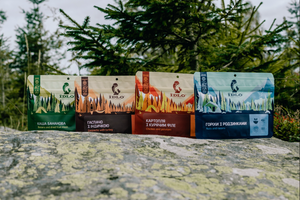
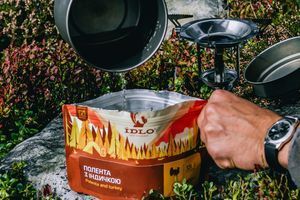
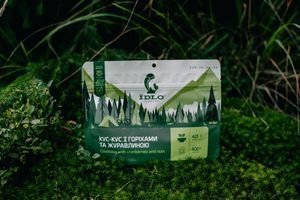
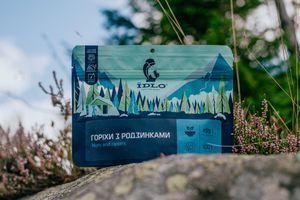
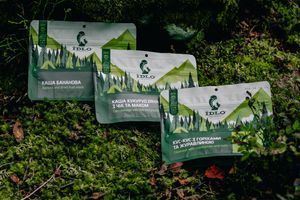
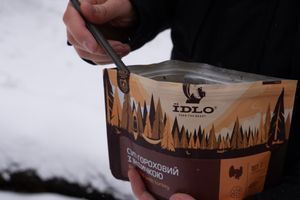
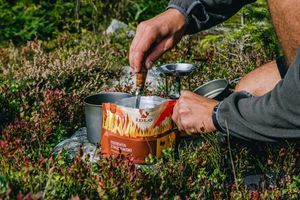
Special attention deserves the sublimation of ready-made dishes or their components, which allows you to create an entire menu with an almost home-made taste without the use of preservatives. Such dishes were previously used only by the military and astronauts, but with the development of technology they became available to the general public, for use as food on a hike, on long expeditions or travels, and simply in the office. Combining dried and sublimated components in dishes allows you to create products with high taste and nutritional properties with a small volume and weight. Such products are affordable, and modern active packaging helps to increase the shelf life.
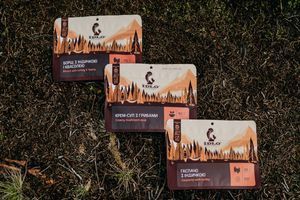
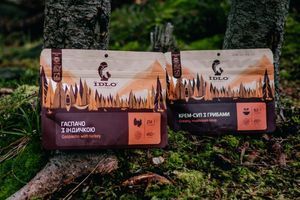
Since 2018, the ЪDLO company has been studying and developing methods for sublimating food components for its needs. All processes take place on specially designed domestically produced equipment. Currently, the product line of dishes includes both combined (freeze-dried plus dried) and fully freeze-dried dishes, pre-prepared by experienced chefs. The assortment is constantly being improved and supplemented thanks to the constant optimization of production processes and the increase in sublimation capacities.